The buying rule
Buy the sous vide machine whose control style you will actually use. Raw temperature accuracy is table stakes now. The real decision is app dependence, onboard controls, wattage, storage, container size, and whether you will cook often enough to justify the premium model.
Use this shortcut:
- Best default: Anova Precision Cooker 3.0.
- Best app-guided premium pick: Breville Joule Turbo.
- Best small-kitchen Anova: Anova Nano 3.0.
- Best for big batches: Anova Precision Cooker Pro.
- Best low-risk starter: Inkbird ISV-100W.
Do not overbuy for steak night once a month. Do not underbuy if you want weekly meal prep, long cooks, or larger containers. A sous vide circulator is small, but the workflow around it decides whether it becomes a habit.
What we prioritized
Sous vide is one of the few kitchen tech categories where the hardware barely matters and the software decides whether you actually use the thing. A $229 cooker with clear controls gets used three times a week. A $99 cooker with a bad app gets used three times then sits in a cabinet. We weighted these picks for that reality: temperature accuracy is table stakes, app reliability is where the real money is made or wasted.
Every cooker on this list will hold 130 degrees Fahrenheit for 36 hours without breaking a sweat. The difference between them is what the experience around that 36 hours looks like.
We weighted app reliability, physical control fallback, heating power, container capacity, clamp design, cleaning, noise, storage, warranty path, recipe guidance, and whether replacement units and support are easy to find.
The shortlist
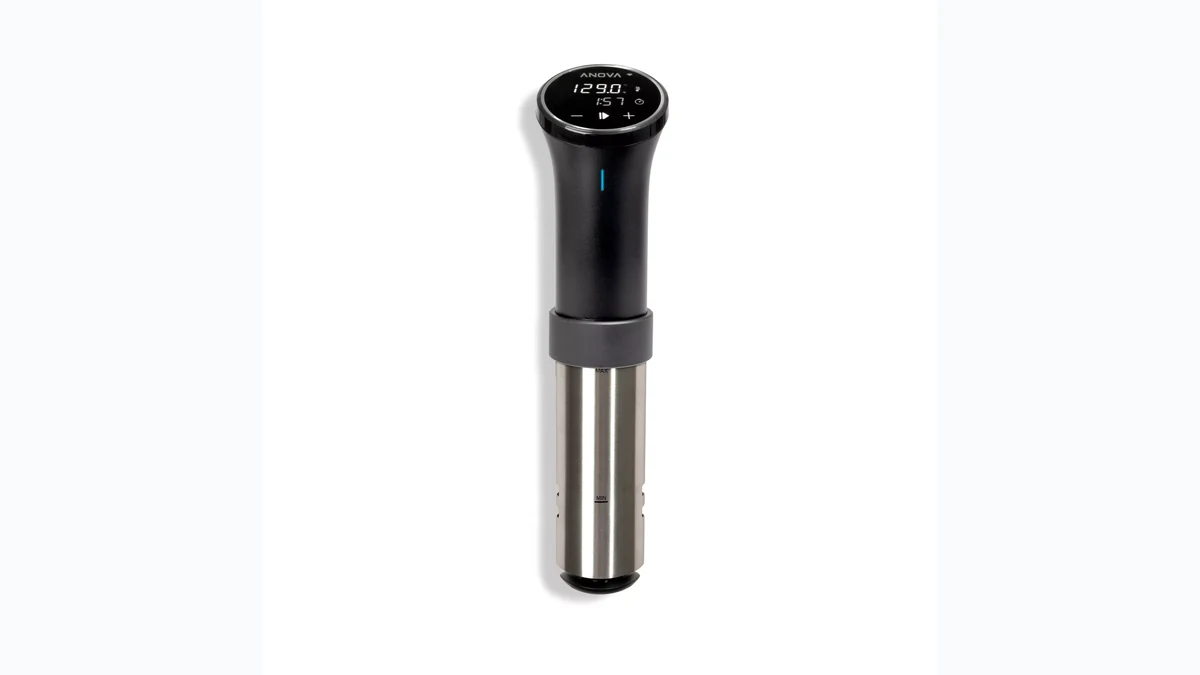
Anova Precision Cooker 3.0
The third generation of the cooker that defined the category. 1100W, Wi-Fi, two line touchscreen, and onboard controls make it the default smart pick even with Anova's app subscription friction.
Strengths
- Strong Anova ecosystem plus physical controls
- Touchscreen lets you skip the app for simple cooks
- Removable stainless skirt for dishwasher cleaning
Tradeoffs
- New Anova app users face subscription friction
- Slightly louder than the Nano on max heat
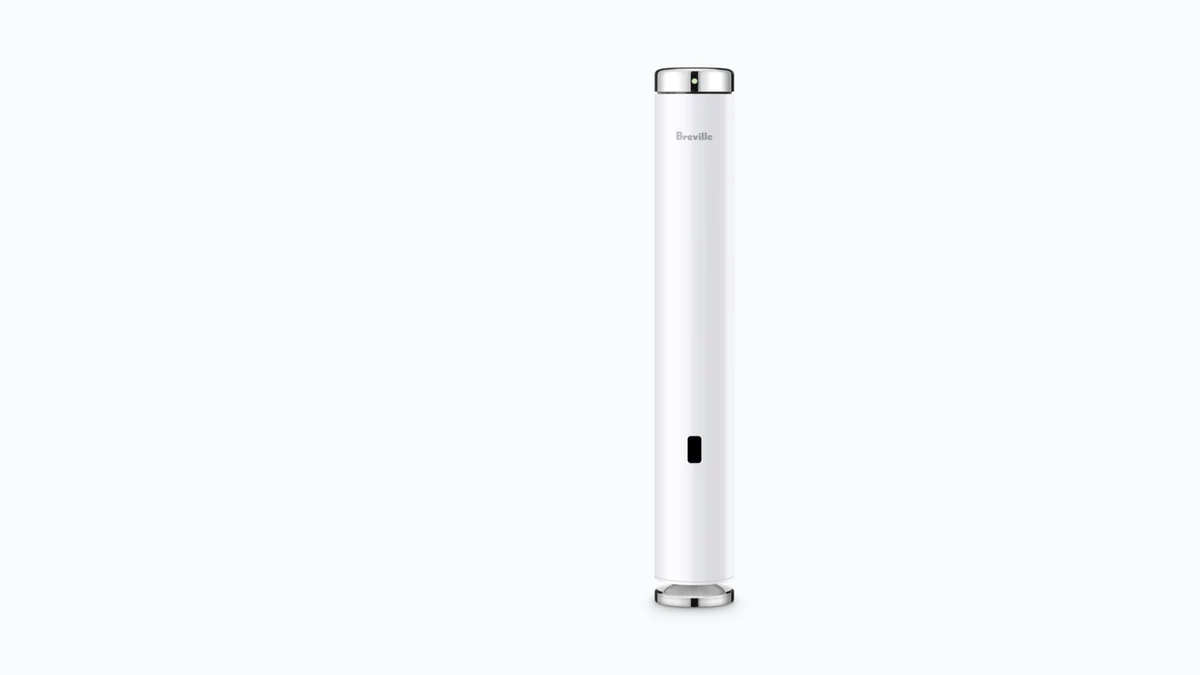
Breville Joule Turbo
App only, no buttons, and the fastest cooker on this list for supported Turbo recipes. Visual Doneness sliders take guesswork out for new sous vide cooks. The pick if you cook steaks and salmon and value time.
Strengths
- Turbo mode can cut selected cook times roughly in half
- Most polished onboarding for a new sous vide cook
- Smallest, lightest serious cooker here
Tradeoffs
- Phone required, no physical controls at all
- Locked into Breville app ecosystem
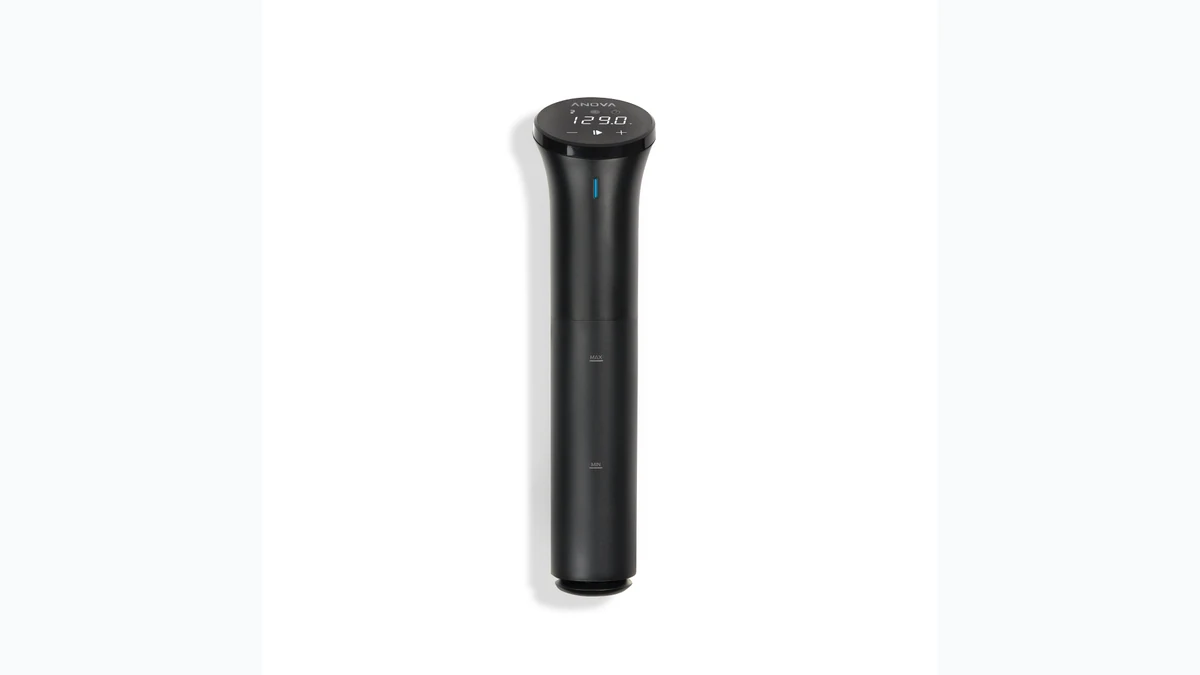
Anova Precision Cooker Nano 3.0
The full Anova app and 0.1 degree precision in a smaller 850W body for $100 less. If you mostly cook for one or two and do not need to heat 30 liters of water, the Nano is the smart spend.
Strengths
- Same Anova app, same precision, smaller price
- Compact body stores in a drawer
- Quiet enough to run overnight
Tradeoffs
- Slower to come up to temp on large baths
- Lower wattage shows on long, full pot cooks
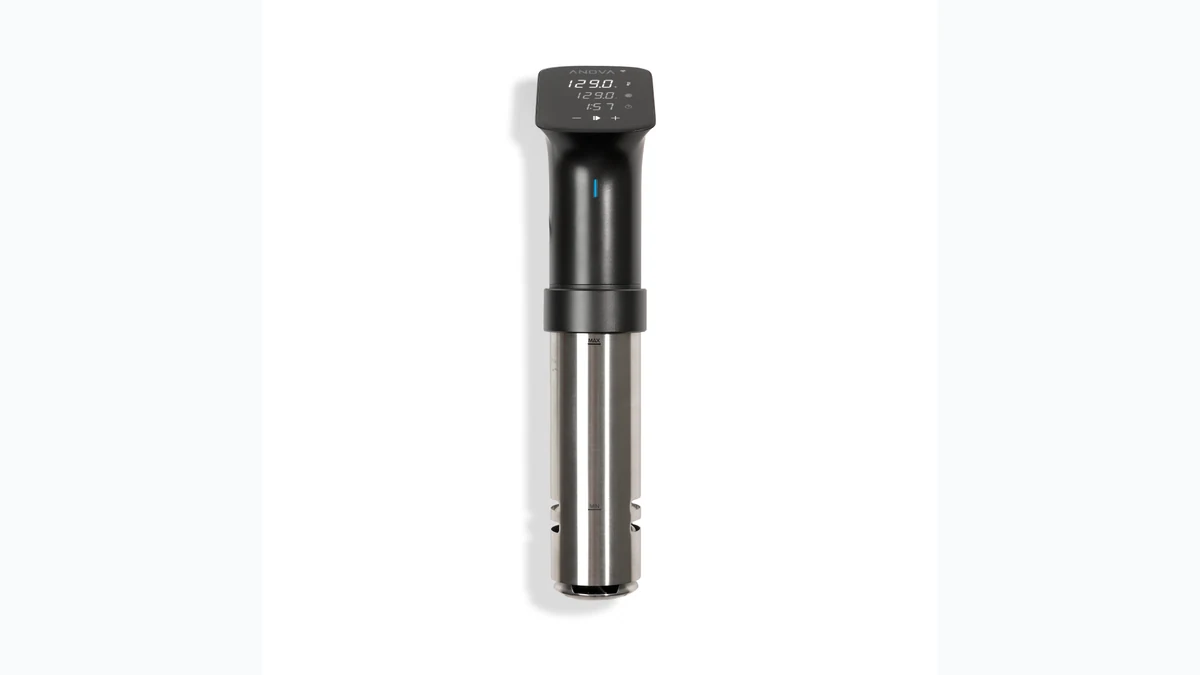
Anova Precision Cooker Pro
1200W, IPX7 waterproof, drop tested, rated for 10,000 hours of continuous use. Built for restaurants and home cooks who run weekly batch cooks. The buy it once pick if budget allows.
Strengths
- Built like commercial equipment, all metal body
- Heats large containers fast, up to 100L
- Plus or minus 0.05 degrees C accuracy
Tradeoffs
- Overkill for two person households
- Larger and heavier than the standard 3.0
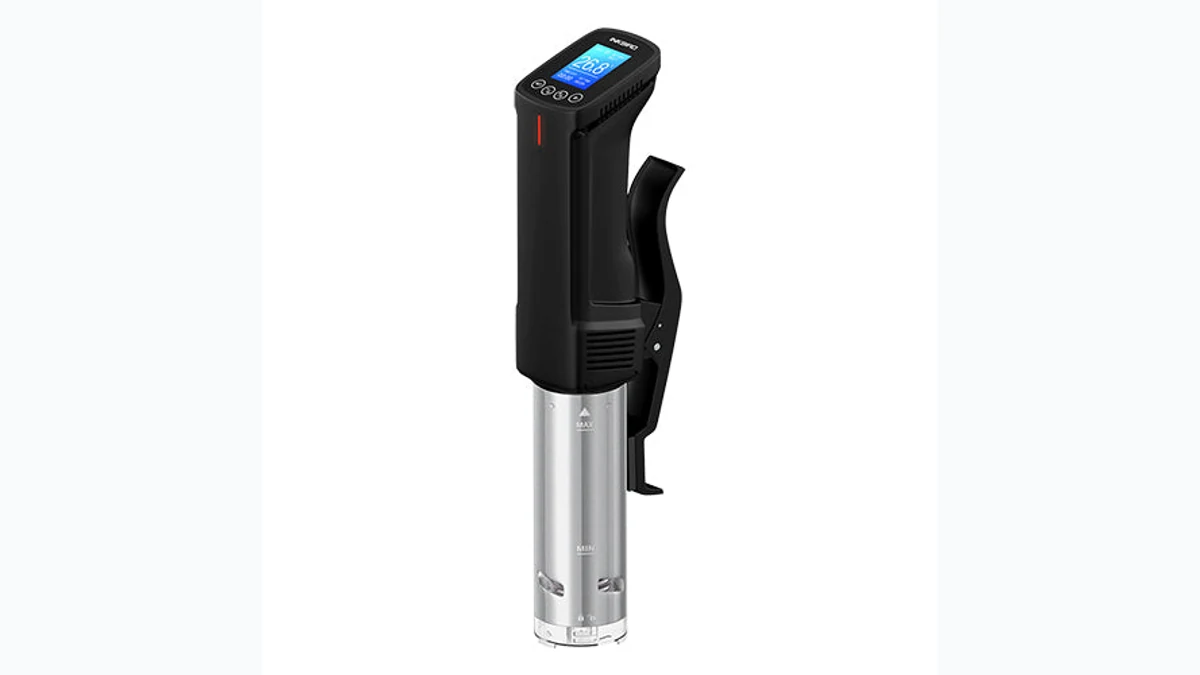
Inkbird ISV-100W
$99 buys you a Wi-Fi sous vide with 1000W heating, app control, and accuracy good enough that most cooks will never feel the difference from the Anova. The right first sous vide for anyone unsure they will use it weekly.
Strengths
- Half the price of the Anova Nano with similar precision
- 1000W heats reasonably fast for the budget
- Quiet operation under 40 dB
Tradeoffs
- App is functional but not as good as Anova or Joule
- Build quality is plastic, not metal
Side by side
| Cooker | Price | Watts | App | Best for |
|---|---|---|---|---|
| Anova Precision Cooker 3.0 | $229 | 1100W | Anova | Best overall |
| Breville Joule Turbo | $249 | 1100W | Joule | Fastest supported cooks, best UX |
| Anova Nano 3.0 | $149 | 850W | Anova | One or two people |
| Anova Precision Pro | $399 | 1200W | Anova | Big batches, long cooks |
| Inkbird ISV-100W | $99 | 1000W | Inkbird | First sous vide |
Which sous vide machine should you buy?
Best for most cooks: Anova Precision Cooker 3.0
The Anova Precision Cooker 3.0 is the safest buy because it gives you the Anova ecosystem without forcing every simple cook through a phone. The physical controls matter more than spec sheets suggest. If you want to set 135 degrees for steak or 145 degrees for chicken, the unit itself can handle that without turning dinner into an app session.
The caution is Anova’s app and subscription friction for newer users. If the app is the main reason you are buying, make sure you are comfortable with Anova’s current software model before checkout. If not, the onboard controls still make the 3.0 easier to live with than app-only machines.
Best premium experience: Breville Joule Turbo
The Breville Joule Turbo is the polished pick. It is compact, app-guided, and especially good for people who want visual doneness help instead of a spreadsheet of time-and-temperature tables. The Turbo value is strongest for supported proteins where the app can shorten selected cooks.
The tradeoff is dependence. Joule has no physical controls. If your phone, account, Wi-Fi, or app flow annoys you, there is no fallback knob on the unit.
Best compact Anova: Anova Precision Cooker Nano 3.0
The Nano 3.0 is the better Anova for small kitchens, one- or two-person households, and cooks who mostly use a stock pot instead of a large container. It costs less and stores more easily.
The lower wattage shows up when you heat larger baths or cook bigger batches. If you want family-size meal prep, buy the standard 3.0 or Pro instead.
Best for serious batch cooks: Anova Precision Cooker Pro
The Anova Pro is overkill for casual cooks and exactly right for people who run sous vide like a weekly prep system. The higher power, tougher build, and larger-container confidence are the reasons to pay more.
Buy it if you cook for groups, prep multiple proteins, or run long cooks often. Skip it if the unit will spend most weeks in a drawer.
Best budget starter: Inkbird ISV-100W
The Inkbird ISV-100W is the low-risk entry point. It gives you Wi-Fi control and enough power for normal home cooks without asking for Anova or Breville money.
The compromise is the ecosystem. The app, industrial design, and support path are not as polished as the leaders. That is acceptable if this is your first circulator and you are still proving the habit.
Mistakes to avoid
Do not buy a sous vide circulator without budgeting for the container. A stock pot works, but a lidded container reduces evaporation and makes long cooks easier. Do not assume the app is optional on every model. Joule needs the app; Anova gives you more on-device fallback. Do not skip the sear. Sous vide cooks the inside; a hot pan, grill, broiler, or torch finishes the outside.
Also avoid leaving long cooks uncovered. Evaporation is the enemy on overnight and multi-day recipes. A fitted lid or covered container can matter more than upgrading the circulator.
How to read this list
If you are buying your first serious sous vide, the Anova 3.0 is the safe answer. It is the most owned, most reviewed, and most supported cooker in the category, and the app continues to improve. The Joule Turbo is the right pick if you have either resisted sous vide because it takes too long, or you specifically prefer polished iPhone-style onboarding to depth of features.
The Nano 3.0 is the right pick if you cook for one or two and a 20 quart pot is more than you ever use. The Pro is the right pick if your sous vide week is brisket on Sunday, short ribs on Monday, chicken stock on Tuesday. The Inkbird is the right pick if you want to see whether sous vide fits your kitchen routine before spending $250.
Source checks
- Anova Precision Cooker 3.0 official product page: Anova Precision Cooker 3.0.
- Breville Joule Turbo official product page: Breville Joule Turbo.
- Anova Precision Cooker Nano 3.0 official product page: Anova Nano 3.0.
- Anova Precision Cooker Pro official product page: Anova Precision Cooker Pro.
- Inkbird ISV-100W official product page: Inkbird ISV-100W.
Related sous vide decisions
- If this is your first circulator, start with the best sous vide machine for beginners.
- If you are stuck between the two premium mainstream picks, read Anova Precision Cooker 3.0 vs Breville Joule Turbo.
- If you already know you want Anova, read Anova Precision Cooker 3.0 vs Nano 3.0.
The bottom line
For most kitchens in 2026, buy the Anova Precision Cooker 3.0. The app is what you will use ten times more than the unit itself, and Anova still owns it.
Pick the Joule Turbo if you cook weeknight proteins more than anything else and want supported Turbo recipes done faster. Pick the Anova Nano 3.0 to save $100 without losing the Anova ecosystem. Pick the Anova Pro if you cook batches every week. Pick the Inkbird ISV-100W if you want the lowest barrier to entry and you can upgrade later if it sticks.
Read the full Anova Precision Cooker Nano 3.0 review if you are buying the compact Anova pick.
Read the full Breville Joule Turbo review if you want the faster guided-app pick.
Read the full Inkbird ISV-100W review if you want the cheapest serious starter.
Frequently asked questions
Do I need Wi-Fi on a sous vide?
Yes if you cook longer than two hours, no if you mostly do 30 to 60 minute proteins. Wi-Fi notifications matter for the 24 to 72 hour cooks like brisket or short ribs where you want to know if the lid blew off or the cooker disconnected. For everything else, the screen on the unit is enough.
Is the Joule Turbo really faster?
Yes for supported Turbo recipes. Turbo mode uses Breville's algorithm to bring selected foods to target faster while still finishing at the intended doneness. Do not assume every long sous vide cook gets cut in half; this is most useful for weeknight proteins.
Anova or Breville Joule, which app is better?
Anova for breadth of features and reliability. Joule for the smoothness of the new cook onboarding. Anova lets you save custom programs, has a deeper recipe catalog, and historically has handled Wi-Fi outages better. Joule is more opinionated, which beginners like and intermediate cooks sometimes find limiting.
Will the Inkbird actually keep up with the Anova?
Yes for temperature accuracy. The Inkbird ISV-100W has been measured by independent reviewers at well within 0.1 degree Celsius of target, which matches the Anova spec. Where it lags is software, app polish, and long term build quality. For a first sous vide it is enough; if you cook weekly for years, the Anovas earn the upgrade.
What size pot or container do I need?
An 8 to 12 quart stock pot works fine for most cooks. Once you cook regularly, a dedicated polycarbonate sous vide container with a fitted lid is the upgrade most people regret not buying sooner. Lids reduce evaporation and let the cooker run cooler. Budget around $40 for a 12 to 18 quart container with a custom lid.
Are there any sous vide brands to avoid?
Unknown brands under $80 with sub 800W ratings struggle to hold temperature on anything larger than a 6 quart pot, and many do not have Bluetooth, let alone Wi-Fi. There is no reason to step below the Inkbird in this category. The price gap is small and the reliability gap is large.
Does sous vide actually replace other cooking methods?
It is a step, not the whole meal. Sous vide brings proteins to perfect internal temperature with zero overcook risk. You still need a hot sear, a grill, or a torch to finish. The combo, sous vide followed by a 30 second sear, is what makes the technique worth the gear. Without the finishing step, the result tastes flat.
More from Smart Kitchen
For adjacent kitchen tech, start with our home espresso coverage: Best Espresso Machines Under $1,000.